
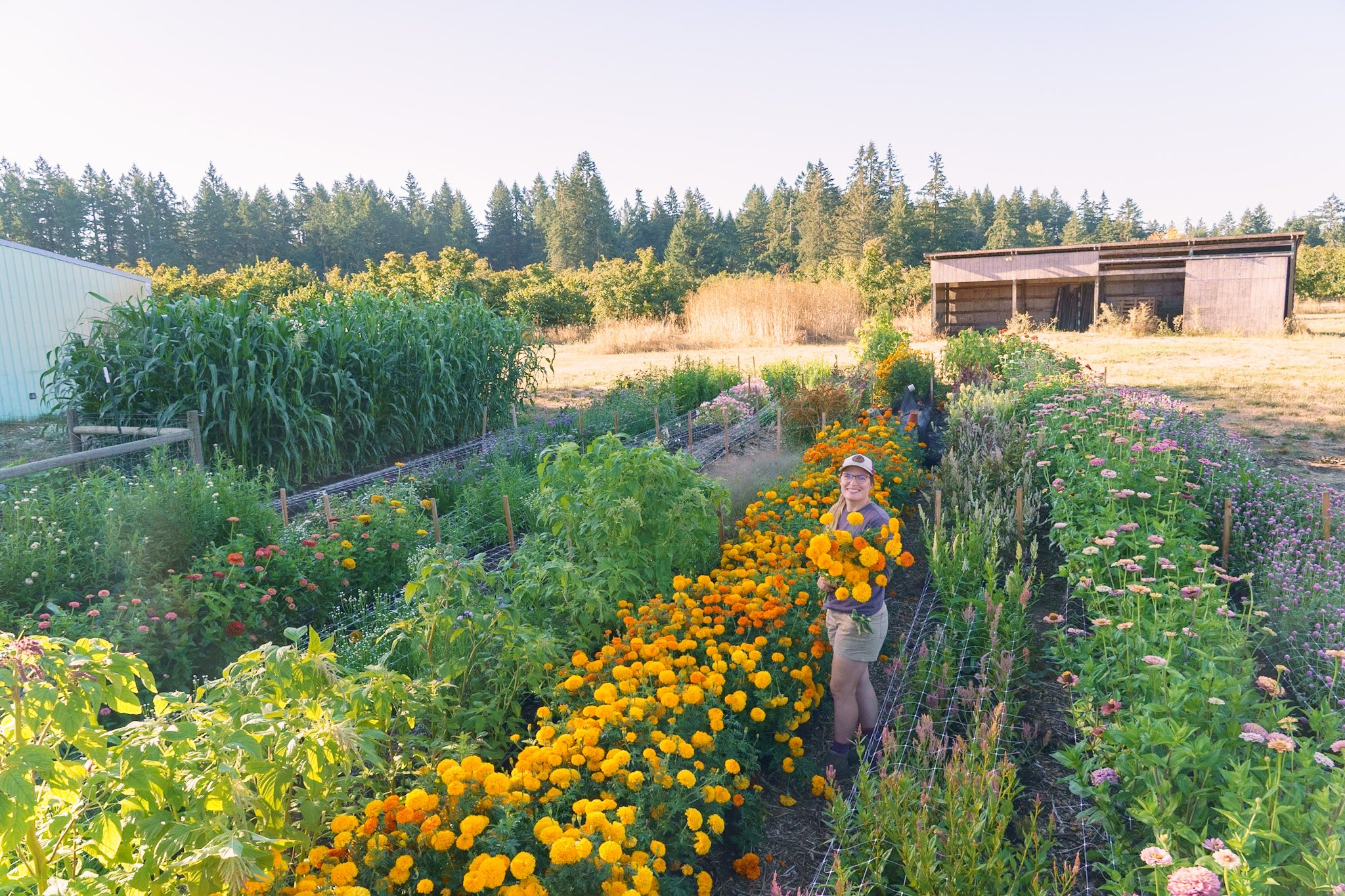
My flower farm is in St. Paul, Oregon, about 45 minutes away from Portland, the nearest big city. I’m in a rural area 10 minutes from the other small towns in my area.
There are SO many different ways to sell flowers when you run a flower farm, and I feel like I’ve tried a little bit of everything in the 2 years I’ve been in business:
Bouquets at Farmer’s Market & Pop-ups
Mother’s Day & dried flower wreaths during the holidays
A La Carte Wedding Florals
Bouquets on consignment at a local shop
Weekly Bouquet Subscriptions
Bulk Buckets for DIY Bouquets
Wholesale to Florists
On-farm U-Picks and Workshops
As you can imagine, all of these different offerings was super exhausting. I started to get burnt out because my dream is to be a great flower farmer, not a great floral designer.
Quick note before we dive into the rest of the post. I created a Pricing Guide to help you figure out wholesale pricing for commonly grown flowers. You can download that for free below!

My first U-Pick I hosted for friends in 2025!
My goal for my first 2 years of business was to try all sorts of stuff to see what I liked best, and over time I found that I enjoyed the farming side of things more than the floristry side.
So when local florists started asking me if I sold wholesale, I said Yes and then spent a ton of time researching and figuring out how to do it!
Why I started selling to florists instead of selling bouquets
The short answer is, I want to stop making bouquets!! I had some wrist injuries last year that make it really painful to hold bouquets and manipulate flowers for extended periods. I had a lot of trouble managing time when it came to selling bouquets at markets and events and got really burnt out after an exhausting spring season. So over the summer of 2026, I decided to intentionally shift my business away from bouqets to selling primarily wholesale and Bulk Buckets to DIY brides.
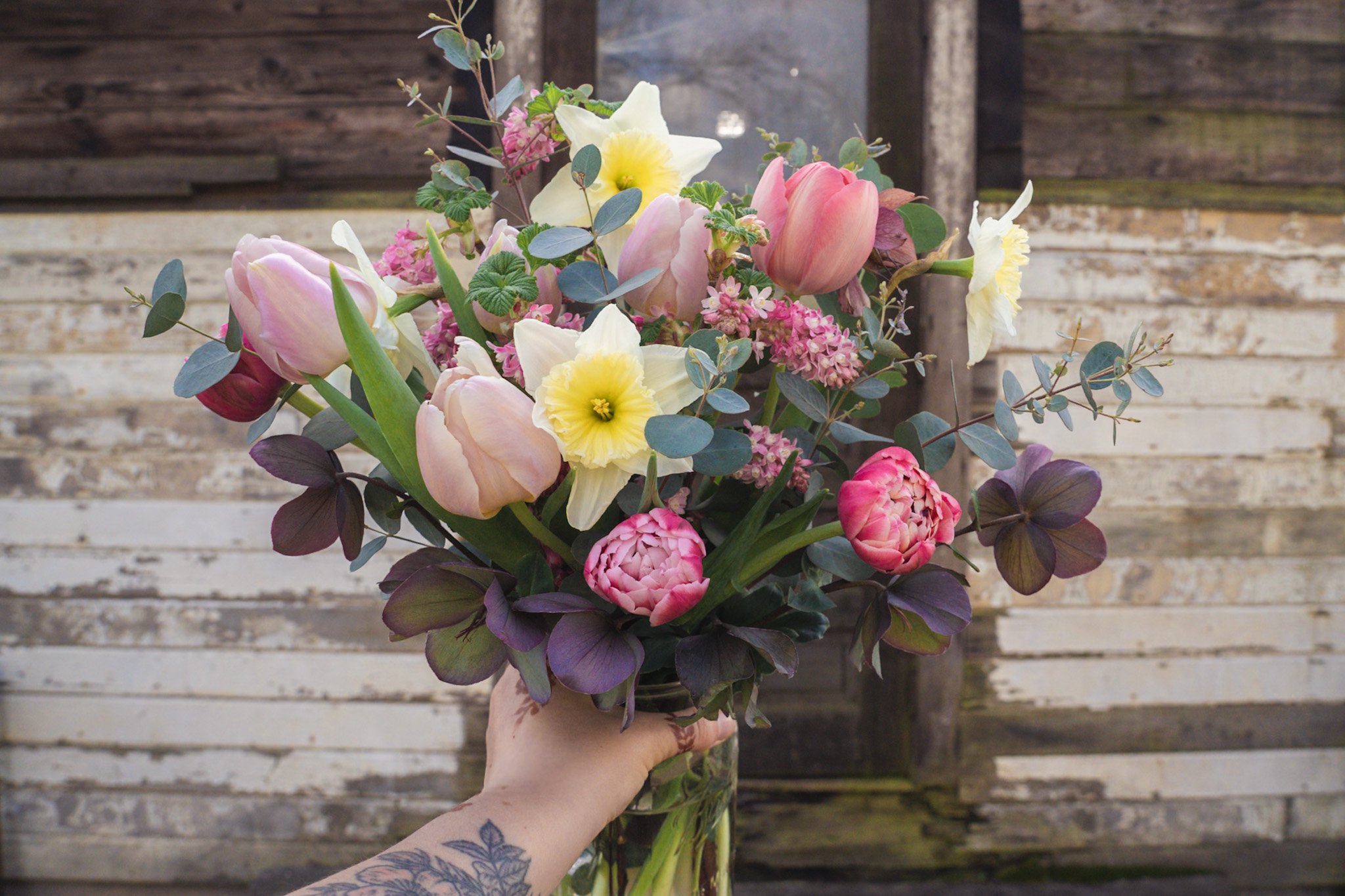
The Pros & Cons of selling to florists
Pros
Labor is minimal compared to making bouquets: instead of spending all this time assembling bouquets and getting them to customers, I can just pick flowers for a wholesale order and then the florist comes to my farm to pick up (my goal for 2027 is to get a delivery van to deliver into Portland).
Florists understand the price of flowers: no more price haggling over bouquets at a market or feeling guilty charging what a bouquet is really worth. Florists know the going rate of flowers and as long as yours are high quality, they will pay the wholesale price.
You don’t have to spend a bunch of time at a market or selling bouquets individually: it takes so much time to sell a $30 bouquet that you worked so hard to grow and assemble. Florists generally place larger orders and pick them up easily.

It is so satisfying to harvest a cartload of flowers and know that I won’t have to make bouquets out of them all!!
Cons
There’s not a lot of wiggle room with prices: florists expect to pay the going rate for flowers, so you can’t just randomly charge double what everyone else is charging for the same zinnias and expect florists to buy it.
If you have a ton of extra of a certain type of flower, you don’t have an alternative way to sell those flowers: for example, my snapdragons all bloomed at once and I didn’t have a way to sell that many all at one time, so since I wasn’t going to any other markets or events, I didn’t have a way to sell all those snaps.
If you don’t live close to an area with a lot of florists, you may not have enough local buyers: I am about 45 minutes south of Portland, Oregon, which is a major city for florists. However, there’s tons of other local farms and a huge wholesale market in the city, so it’s hard to get florists to make the drive from the city. Next year I’m planning to get a delivery van to go into the city to make deliveries.
How to Start Selling to Florists
Grow what florists want
Research local florists in your area. They’re probably not all wedding florists! They may design floral installations for businesses, run workshops & events, or own a flower shop. Understand what florists want to buy and grow these things (it’s probably different than your basic bright zinnias that sell well to consumers at a farmers market).
Grow quality flowers
You can’t be selling short little stems or sub-part flowers to florists. They’re just not going to come back and buy from you. I don’t recommend starting to sell to florists as a beginner flower farmer for this reason, it takes a season or two under your belt to produce high quality, long-stemmed flowers that have a long vase life.
Make it clear you sell bunches of flowers, not just market bouquets
If a florist goes to your website or instagram and all they see are photos of your bouquets, then they won’t think you sell wholesale to florists. Share photos of single bunches of flowers and make it clear that florists can buy these from you in large quantities.
Make it easy for florists to buy from you
I use a platform called Rooted Farmers which makes it incredibly easy for florists to scroll through my available bunches and clearly see prices per stem. You don’t have to use Rooted, I’m not a sponsor or anything, but if it’s too difficult to buy from you, a busy florist is just going to go to the regular wholesale market. It’s too difficult on you and them to take orders through text and email and instagram messages. Direct florists to your ordering process to save everyone some hassle.
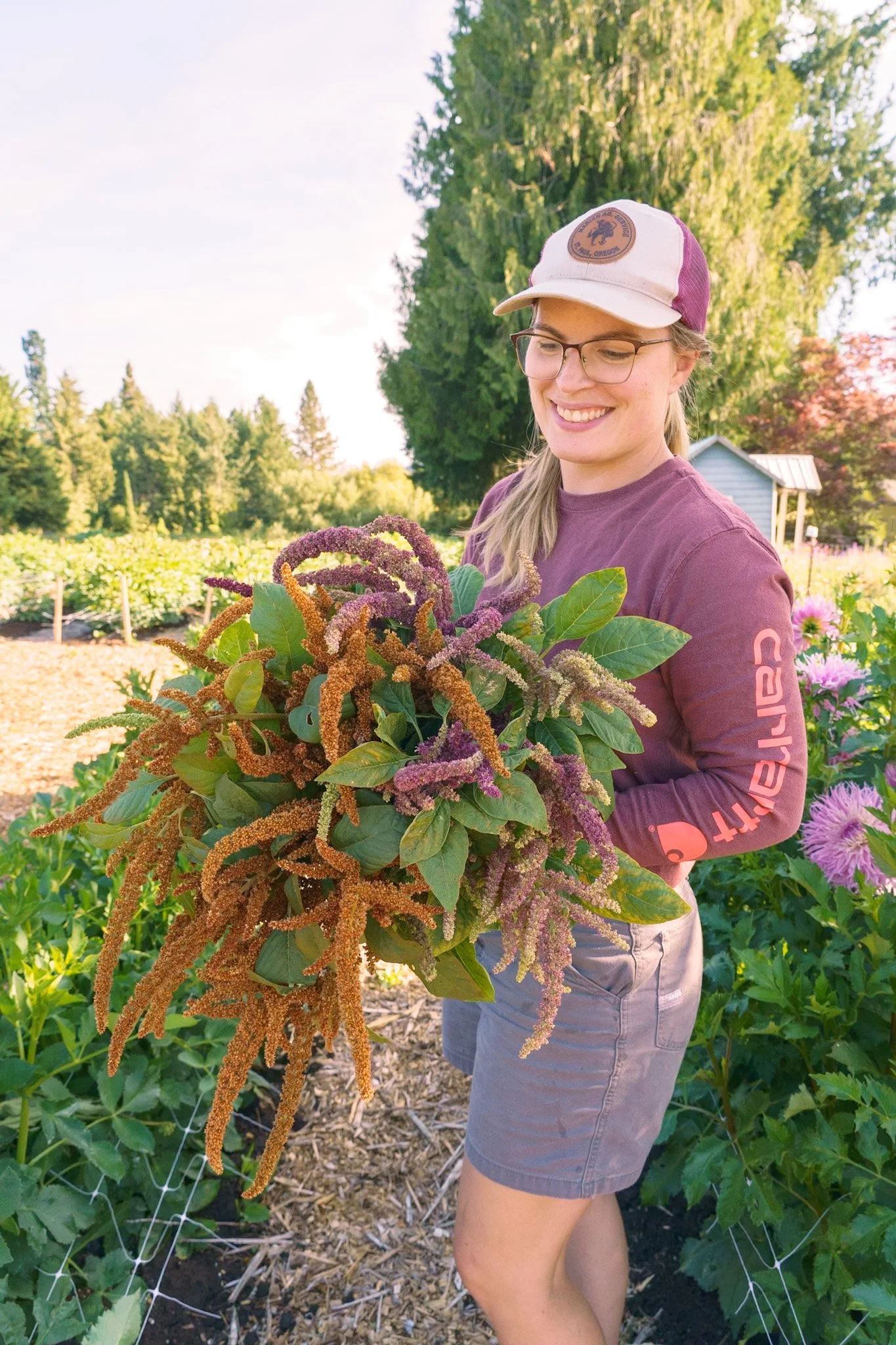
This photo demonstrates to florists that I offer large quantities of a single type of flower, this case, amaranth
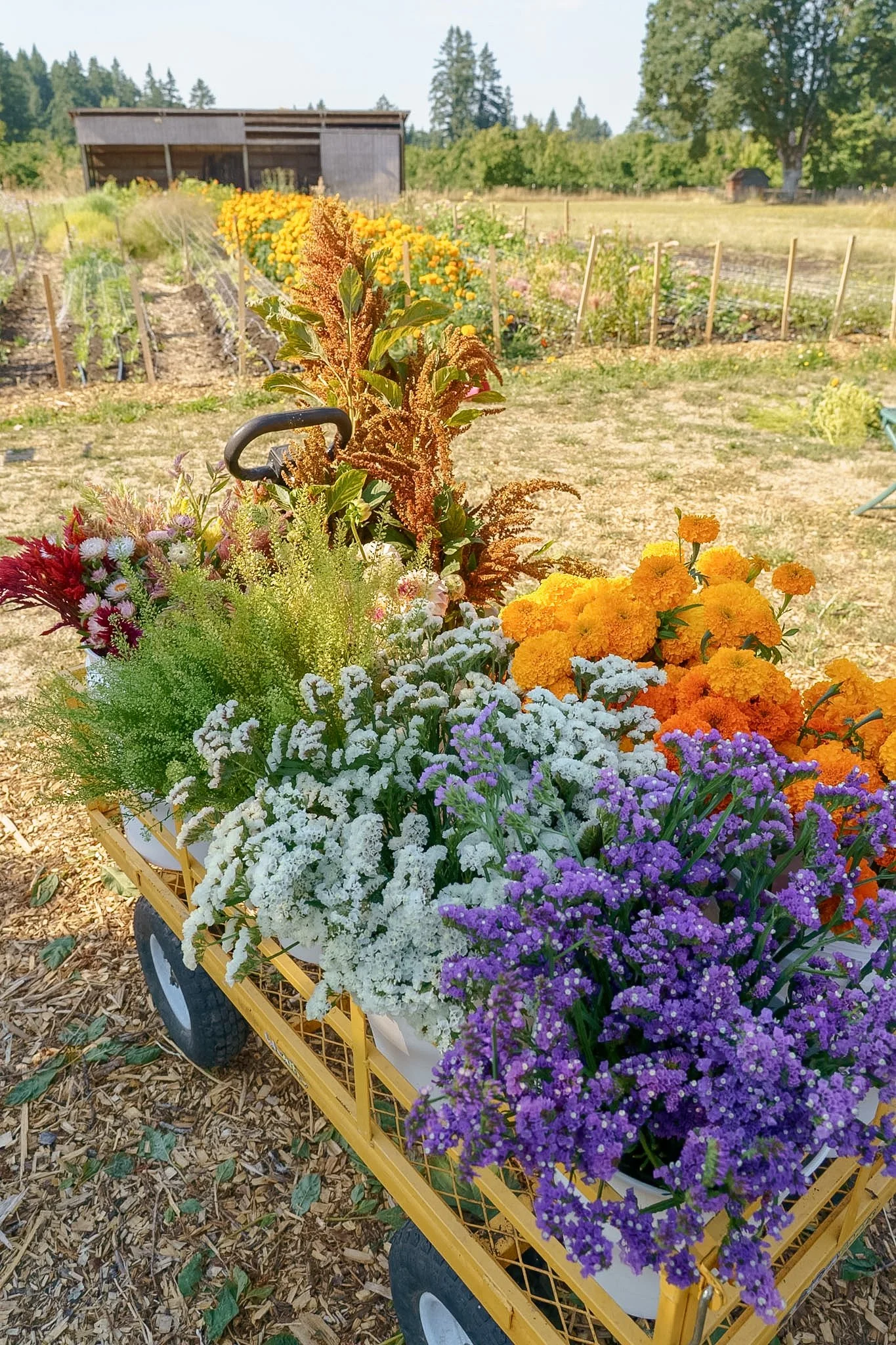
This photo shows I can handle large orders of individual varieties
How to Determine Wholesale Pricing for your Flowers
The general understanding with wholesale flowers is that they are priced by the stem, in 5 or 10-stem bunches (ie large dahlias are often sold in 5-stem bunches while most other stuff is sold in 10-stem bunches).
Individual stem pricing varies, but in general it’s usually $1/stem up to $2/stem (more for specialty flowers such as peonies).
I created a free pricing guide to help you figure out what to charge for commonly grown flowers, you can download that for free below:
There are lots of ways to figure out the going rate for flowers in your area:
Visit wholesale markets and take note of prices
Research price lists online
Ask local florists what they usually pay
Ask other farmers
Join local flower farming groups
How to know which crops are the most worth it to grow
It’s not necessarily the best answer to only grow flowers that have the highest price per stem. There’s usually a reason why expensive flowers are expensive!! For example, peonies may sell at $3/stem, but they are a large investment and have a very short bloom window. Zinnias are a relatively cheap flower, maybe 90 cents a stem, but you can get a ton of flowers in just one season.
My main consideration is the harvesting time. Bachelor’s Buttons are on my no-grow list for this reason!! They just take way too long to harvest for one small fiddly little flower head. I focus on growing crops that are going to give me more bang for my buck.
So, is it the right decision to go the wholesale route for your flower farm?
The answer is maybe! There’s no ‘right’ way to run a flower farm, so whether you’re a bouquet-based business or wholesale model, as long as you’re profitable and enjoying the work, then you’re doing the right thing.
I will say, growing for florists is a big jump for a brand new flower farmer. I’d get a season or two under your belt before you take on a lot of florist customers. It takes experience to produce high quality flowers and reliably complete florist orders.
Upcoming Workshop: Wholesale Growing for Flower Farmers
Saturday, Dec 13th at 10AM Pacific
In this workshop, I’ll dive really deep into all the different aspects of growing for florists, including:
The Realities of Selling Wholesale
Breakdown of my costs and time involved in selling bouquets and selling for wholesale, and how to reduce costs to increase profits
Growing for Florists vs Growing for Bouquets
How to grow quality flowers for florists including stem length, quality checks, industry standards, etc
Marketing & Getting Florist Clients
Strategies to attract florist clients including social media, email marketing, wording on your website, in-person connections, and more
Selling & Product Delivery Methods
How I stopped taking orders via email and messages and switched to an online shopping platform
Pricing Flowers for Wholesale
How to determine which crops are most worth it to grow based on wholesale prices per stem
How to Choose Varieties that Florists Want to Buy
What florists are looking for and how to know what to include in your crop plan